
A Wave of “Extreme Heat” Sweeps Southern Europe
Jul 18, 2024
6 min read
Updated: Jun 19
In the summer of 2024, Southern Europe experienced an unprecedented wave of extreme heat that has impacted millions of lives across the region. As temperatures soared to record highs, the effects were felt across multiple sectors, including health, agriculture, infrastructure, and the environment. This article delves into the causes, impacts, and responses to this severe weather event, offering a comprehensive look at the heatwave that swept through Southern Europe.

### The Meteorological Context
The extreme heatwave that hit Southern Europe in July 2024 was the result of a combination of meteorological phenomena. A persistent high-pressure system, known as a blocking high, settled over the Mediterranean region, causing a prolonged period of dry, stable air. This high-pressure system prevented cooler Atlantic air masses from entering the region, leading to unrelenting heat.
In addition to the blocking high, the presence of a low-pressure system over the Atlantic Ocean contributed to the extreme conditions. This low-pressure system funneled hot air from North Africa into Southern Europe, exacerbating the heatwave. Climate scientists have pointed out that such patterns are becoming more frequent and intense due to climate change, which increases the likelihood of prolonged heatwaves.
### Record-Breaking Temperatures
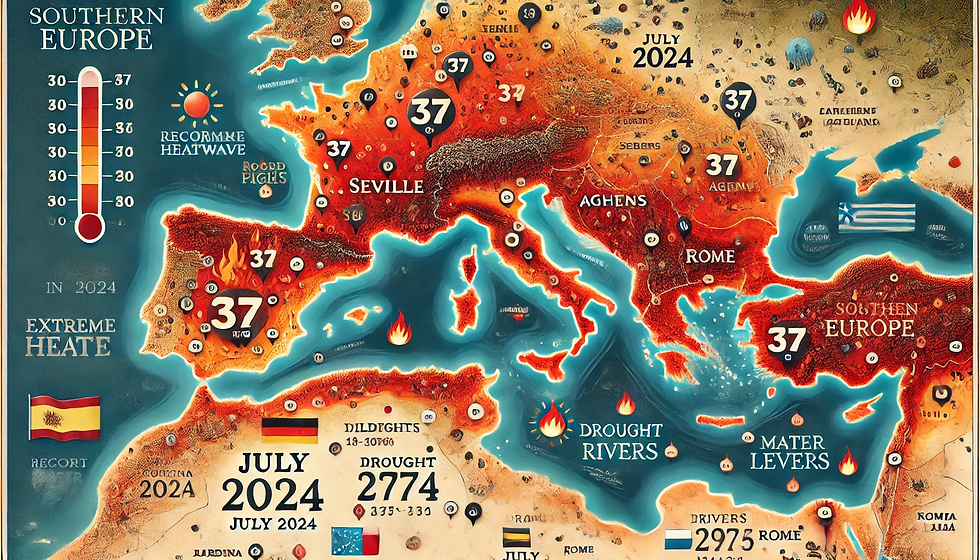
Throughout July 2024, numerous cities in Southern Europe recorded their highest temperatures ever. In Spain, the city of Seville saw the mercury rise to an unprecedented 48.2°C (118.8°F), breaking previous records. Similarly, Athens in Greece experienced temperatures of 45.5°C (113.9°F), while Rome in Italy saw temperatures soar to 44.8°C (112.6°F).
These extreme temperatures were not limited to urban areas; rural regions and coastal areas also experienced record highs. The relentless heat led to dangerous conditions, especially for vulnerable populations such as the elderly, children, and those with preexisting health conditions.

### Health Impacts
The health impacts of the extreme heatwave were severe and widespread. Hospitals across Southern Europe reported a significant increase in cases of heat-related illnesses, including heatstroke, dehydration, and exacerbation of chronic illnesses such as cardiovascular and respiratory diseases. The World Health Organization (WHO) issued warnings and guidelines to help mitigate the health risks associated with the extreme temperatures.
In addition to the immediate health impacts, the heatwave also had longer-term consequences. The persistent high temperatures led to increased air pollution levels, particularly ozone and particulate matter, which further exacerbated respiratory conditions. Public health officials emphasized the importance of staying hydrated, avoiding strenuous activities during peak heat hours, and seeking cool environments to reduce the risk of heat-related illnesses.
### Agricultural and Economic Consequences
The agricultural sector was one of the hardest hit by the extreme heatwave. Crops such as wheat, corn, and olives, which are staple products in Southern Europe, suffered from the scorching temperatures and lack of rainfall. Farmers reported significant losses due to reduced yields and damaged crops. The heatwave also affected livestock, with reports of heat stress and decreased productivity in animals.
The economic consequences of the heatwave extended beyond agriculture. The energy sector faced increased demand as people relied heavily on air conditioning to cope with the heat. This surge in electricity usage led to power outages in some regions, disrupting daily life and business operations. Tourism, a vital industry for many Southern European countries, also saw a decline as tourists avoided the sweltering conditions.
### Environmental Impacts
The environmental impacts of the extreme heatwave were profound. The high temperatures led to widespread wildfires across Southern Europe, with countries like Spain, Portugal, Greece, and Italy battling numerous blazes. These wildfires destroyed vast areas of forest and wildlife habitat, contributing to air pollution and releasing significant amounts of carbon dioxide into the atmosphere.
Water resources were also severely affected. Rivers and reservoirs experienced reduced water levels due to increased evaporation and lack of rainfall, leading to water shortages in some areas. The combination of extreme heat and drought conditions put additional stress on ecosystems already vulnerable to climate change.

### Government and Community Responses
In response to the extreme heatwave, governments across Southern Europe implemented various measures to protect public health and safety. Emergency services were on high alert, and cooling centers were established in major cities to provide relief to those without access to air conditioning. Public health campaigns were launched to educate the public on how to stay safe during the heatwave.
Local communities also played a crucial role in responding to the crisis. Volunteer groups and non-governmental organizations (NGOs) organized efforts to distribute water and provide assistance to vulnerable populations. Social media platforms were used to share information and coordinate community responses, demonstrating the power of collective action in times of crisis.
### The Role of Climate Change
The extreme heatwave of July 2024 serves as a stark reminder of the impacts of climate change. Scientists have long warned that rising global temperatures will lead to more frequent and intense heatwaves. The Intergovernmental Panel on Climate Change (IPCC) has highlighted the need for urgent action to reduce greenhouse gas emissions and mitigate the effects of climate change.
As Southern Europe grapples with the immediate impacts of the heatwave, the need for long-term strategies to adapt to a changing climate becomes increasingly evident. This includes investing in resilient infrastructure, improving water management practices, and developing early warning systems for extreme weather events.
### Future Outlook and Preparedness
Looking ahead, it is crucial for Southern European countries to enhance their preparedness for future heatwaves. This includes strengthening public health systems, improving emergency response capabilities, and implementing policies to protect vulnerable populations. Urban planning and building design can also play a role in mitigating the impacts of extreme heat, with measures such as increasing green spaces and using reflective materials to reduce urban heat islands.
International cooperation and knowledge sharing will be essential in addressing the challenges posed by extreme heatwaves. Countries can learn from each other's experiences and best practices, working together to build resilience against the impacts of climate change.
### Conclusion
The wave of extreme heat that swept through Southern Europe in July 2024 was a significant and sobering event. It highlighted the vulnerability of the region to climate change and underscored the urgent need for action to protect public health, the environment, and the economy. As the world continues to warm, it is imperative that we take bold and decisive steps to reduce greenhouse gas emissions and build a more resilient future. The experiences of this heatwave can serve as a catalyst for change, driving efforts to create a sustainable and climate-resilient Southern Europe.
Frequently Asked Questions About A Wave of “Extreme Heat” Sweeps Southern Europe
What is this article about?
This article provides a detailed and informative exploration of its subject matter, combining well-researched facts with engaging storytelling. It offers clear explanations, relevant context, and practical insights for readers at all levels of familiarity with the topic.
Why is this topic important?
This topic touches on aspects of human experience, history, science, or culture that have broad relevance and lasting significance. Understanding it helps readers make better-informed decisions and engage more meaningfully with the world around them.
What are the key facts about this subject?
The key facts about this subject are presented throughout the article with careful attention to accuracy and clarity. The most important points are highlighted in the headings and opening paragraphs of each section.
How does this topic affect everyday life?
This topic has real-world implications that extend beyond academic interest. Whether through its influence on culture, technology, health, safety, or social dynamics, understanding this subject can help readers navigate related situations more effectively.
Where can I learn more about this topic?
To learn more, explore reputable sources such as academic journals, established news organizations, official government publications, and well-researched books by recognized experts. Online databases and educational platforms also offer extensive resources.
What are common misconceptions about this topic?
Like many complex subjects, this topic is surrounded by misconceptions that can distort public understanding. The article addresses the most common misunderstandings by presenting verified facts and contextualizing information within its proper framework.
How has understanding of this topic changed over time?
Our understanding of this topic has evolved significantly as new research, technology, and perspectives have emerged. What was once accepted as fact has sometimes been revised or overturned by new evidence.
What experts or authorities are relevant to this topic?
This topic is studied and discussed by experts across multiple disciplines, including academics, practitioners, researchers, and journalists. Consulting a range of expert perspectives provides the most balanced and accurate understanding.
Is this topic controversial?
Some aspects of this topic are subject to debate among experts, researchers, and the general public. The article presents multiple perspectives where relevant and distinguishes between established facts and areas where evidence is still being gathered.
What is the historical background of this topic?
The historical background of this topic provides essential context for understanding its current significance. Key events, developments, and turning points in the history of this subject are outlined in the article.
Sources and Further Reading
Academic journals and peer-reviewed publications relevant to this subject.
Official government and institutional reports related to this topic.
Established news organizations and investigative journalism sources.
Books and publications by recognized experts in this field.
Educational platforms and online databases for further research and learning.
Read Also
Stone Masonry Heaters: Heat Storage, Thermal Efficiency, and Off-Grid Heating Without Electricity
he Fate of Sudzha: Europe’s Gas Supply Amid Potential Route Closures and the Rising Energy Crisis
Climate Change in Northern Europe: Impacts and Adaptations
The number of Syrians in Europe


Comments