
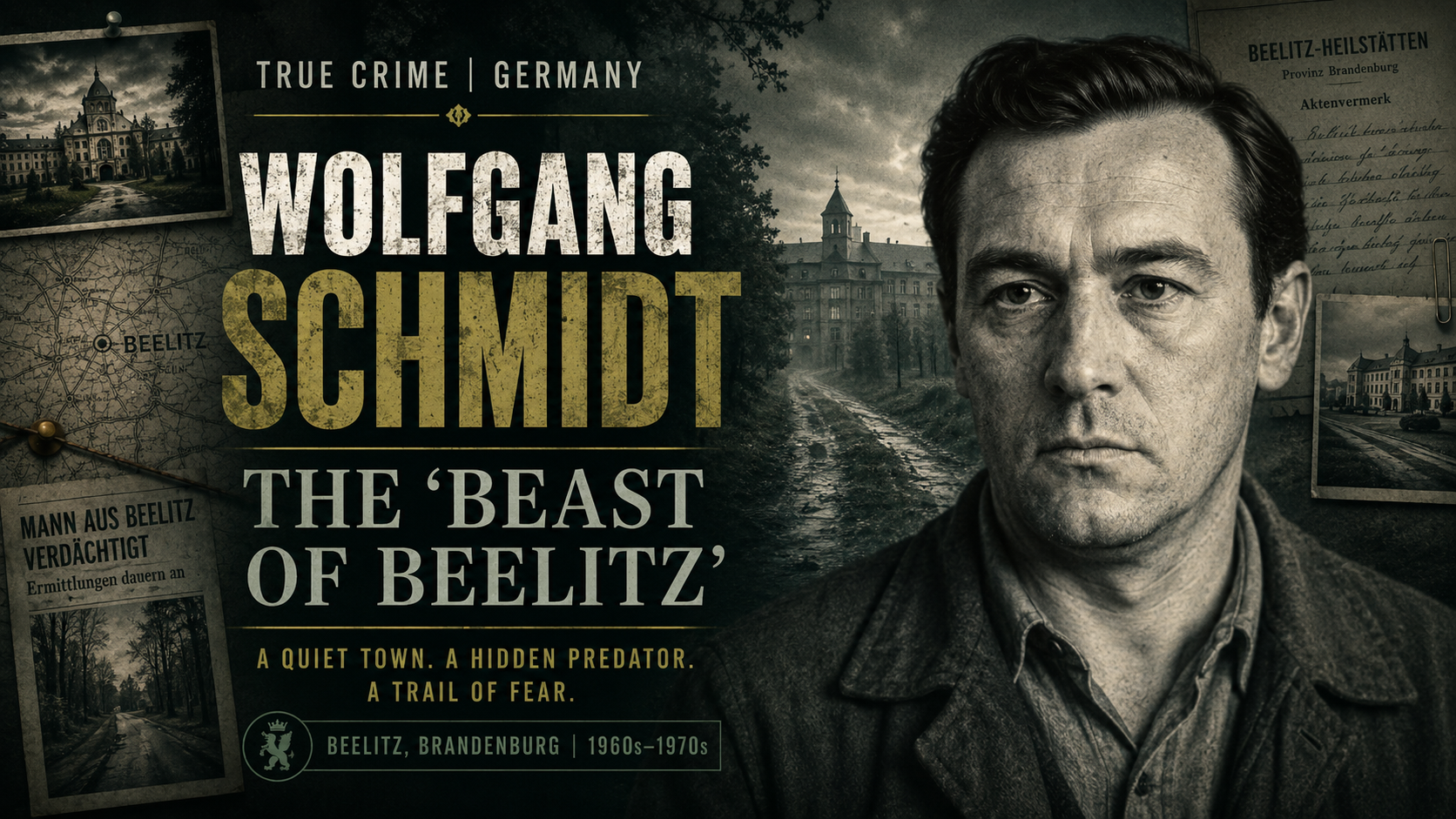
Wolfgang Schmidt: The 'Beast of Beelitz'
Jun 18
3 min read
Wolfgang Schmidt, known as the 'Beast of Beelitz', was a German serial killer convicted of a series of murders in the Brandenburg region around the time of German reunification. This account avoids graphic detail out of respect for the victims.
His crimes, committed near the town of Beelitz, spread fear through the area, and his case became one of the notable German serial-murder investigations of its period.

Key Facts at a Glance
Full name: Wolfgang Schmidt
Born: 1953, Germany
Known as: The Beast of Beelitz
Setting: Brandenburg, Germany
Active: late 1980s-1991
Outcome: Life imprisonment
Crimes Near Beelitz
Schmidt carried out a series of attacks in the area around Beelitz, in the Brandenburg region, during a period spanning the late 1980s and early 1990s. The crimes spread fear through the local communities.
The location gave him his enduring nickname, and the attacks became a focus of intense concern as their number grew.
A Period of Upheaval
Schmidt's crimes coincided with the momentous period of German reunification, a time of profound social and political change. This upheaval formed the backdrop to the investigation.
Out of respect for the victims, the details are not recounted here. The transitional period added complexity to the policing of the case.
A Pattern of Violence
As the attacks continued, investigators recognised the work of a single dangerous offender operating in the region. The pattern of the crimes pointed to a calculating and persistent killer.
The recognition of this pattern intensified the effort to identify and stop the man responsible before he could strike again.
The Investigation
German authorities mounted an investigation to catch the Beast of Beelitz, combining forensic work with traditional detective methods. The inquiry gradually narrowed toward Schmidt.
His arrest allowed investigators to connect him to the series of murders, bringing the campaign of fear in the region to an end.
Trial and Imprisonment
Schmidt was tried, convicted of multiple murders and sentenced to life imprisonment. The proceedings laid out the scope of his crimes and the danger he had posed.
His conviction brought relief to a region that had lived in fear, and it closed one of the notable German serial-murder cases of the era.
A Case of Its Era
The Beast of Beelitz case is closely tied to the period of reunification, a defining moment in modern German history. The timing gave the case a particular resonance.
It became part of the broader story of crime and justice during a transformative period for the country.
A Notable German Investigation
The case is remembered as a significant German serial-murder investigation of its time, demonstrating the challenges of catching a persistent offender amid wider social change.
It illustrated both the fear such crimes inspire and the determination required to bring the perpetrator to justice.
A Lasting Notoriety
Wolfgang Schmidt remains a notorious figure in German crime history, his nickname and crimes a grim chapter in the story of the Brandenburg region.
The case endures as an example of serial violence confronted and ultimately resolved, even amid the upheavals of its time.
Crime Amid Historic Change
The Beast of Beelitz case is inseparable from the extraordinary period in which it unfolded, as East and West Germany moved toward reunification. The upheaval of those years formed the backdrop to both the crimes and their investigation.
Policing a serial offender during such a moment of institutional transformation presented unusual challenges, as structures and responsibilities were themselves in flux. The case stands as a reminder that crime does not pause for history, and that justice must be pursued even amid the most sweeping social change.
The Investigative Challenge
Catching a killer who struck repeatedly in a defined area required investigators to combine forensic evidence with painstaking local inquiry, building a picture of the offender piece by piece. The pressure to act before another life was lost shaped every stage of the effort.
The eventual breakthrough underscored a lesson common to many serial cases: that persistence, careful evidence-handling and the steady accumulation of detail are usually what bring a hidden offender into the open, even when no single dramatic clue presents itself.


Comments